A game-based biofeedback device
Recovery After Central Nervous System Injuries
Stem Cell Treatment
A comprehensive stem cell biotherapy approach can achieve significant results in the recovery of patients with CNS injuries!
ADVANCED MEDICAL TECHNOLOGIES
Stem Cell Treatment for Central Nervous System Injuries
Although rehabilitation procedures keep improving every year (for example, virtual-reality movement trainers have emerged), using them alone doesn't produce the desired result. Recovery requires addressing not just the symptoms but the underlying cause of the condition. Stem cell biotherapy does exactly that.
Our clinic's specialists have developed a combined program for treating central nervous system injuries. It includes harnessing the regenerative properties of stem cells, neurostimulation using our proprietary equipment (NeiroPort, NeoStim), physiotherapy, and individually tailored physical rehabilitation.
Learn more about stem cell therapy at a free consultation
Free initial appointment and online doctor consultation
4,990 RUB
Free
Offer extended until August 26, 2026
- The doctor takes a complete medical history and reviews your case;
- A review of your medical records, including test results and diagnosis;
- Guidance on treatment options using cell-based technologies, based on your specific indications and contraindications;
- A prognosis on the expected results and effectiveness of stem cell therapy in your specific case;
- A preliminary, individual treatment plan with procedure cost information;
- A list of any additional tests or examinations, if needed;
- Answers to all your medical and logistical questions.
20 days left until the offer ends — submit your request now:
Submit your request online
or call us at +7 (909) 632-30-93
Stem cell biotherapy can be applied to patients at various stages of the condition.
The potential of using stem cells to treat central nervous system conditions rests on their core property — differentiation potential. Upon receiving a neural signal of damage to a part of the body, the brain directs a portion of the stem cells to the so-called "lesion site," where they transform into cells of the damaged nerve tissue, replacing the diseased ones. The treatment has a powerful immunomodulatory effect, helping to halt disease progression and prevent the breakdown of nerve fiber structure.
In other words, stem cells can independently locate the source of damage and the cause of organ or system dysfunction. They migrate to the site of the problem and trigger a whole cascade of regenerative reactions there, restoring impaired functions. In this way, unlike other traditional treatment methods, stem cell therapy addresses not only the symptoms but the cause of the disease!
The best time to undergo stem cell treatment is between 1.5 and 6 months after the injury. However, we can still help patients recover even at a later stage..
To restore and treat central nervous system damage, we use 4 methods of administering stem cells into the patient's body:
- Intravenous
- Intrathecal
- Intranasal
- Local
When administered simultaneously, stem cells from different sources reinforce each other's therapeutic effect and extend the duration of the treatment's benefits.
Combining several administration routes allows stem cells to reach all target organs (the central and peripheral nervous system, the muscular system). There, they trigger a whole cascade of regenerative processes. This activates and forms new nerve tissue cells that replace damaged areas of nerve tissue, producing a therapeutic effect on all of the disease's symptoms.
- Intravenous route of administration delivers stem cells via the bloodstream to every organ and tissue weakened by the disease, and helps normalize the function of all body systems. Every person's body contains stem cells, but administering them in a dose millions of times greater than their normal levels in the body allows them to restore the myelin sheath of damaged nerve fibers and curb the excessive immune response that this damage triggers. Such a large number of stem cells lets them distribute throughout both the central nervous system and the entire body, improving the function of every system and organ. This is especially important for elderly patients, whose bodies are weakened by age, and for patients with dementia, which often develops alongside chronic conditions. Clinical studies have also shown that administered stem cells can be modified (differentiated) into other cell types, including nerve cells. Through this modification, stem cells integrate among the cells of nerve bundles, replacing all damaged areas. This restores the process of nerve impulse conduction and leads to a reversal of the disease's symptoms.
- For intrathecal administration, stem cells are administered directly into the spinal canal. Carried by the flow of cerebrospinal fluid, they cross the blood-brain barrier and settle directly at sites of brain and motor neuron damage. There, they stimulate regenerative processes and slow disease progression, and in some cases restore lost function. Administering stem cells into the spinal canal slows the destruction of motor neurons and helps partially restore the structure of the spinal cord. By replacing dead neurons, stem cells reduce symptoms and improve motor impairments without triggering a negative immune response in the body.
- Intranasal route — administering stem cells and exosomes (a concentration of regenerative substances produced by stem cells) to the patient by inhalation. This allows stem cells and exosomes to reach the brain directly through the vascular network of the nasal passages, affecting the cognitive manifestations of the disease: it improves behavioral responses, speech, attention, mood, sleep, and social adaptation, and importantly, it's very well tolerated by patients.
- Local route: with age and disease progression, muscle contraction strength and muscle mass decrease (secondary muscle atrophy develops). That's why local administration of stem cells and regenerative substances (exosomes) into ligaments and muscles is extremely effective. They are administered into the musculoskeletal system via electrophoresis (a type of physiotherapy that facilitates penetration into deeper tissue layers) or injections. This causes new blood vessels to form in the muscles, giving them a greater supply of oxygen and nutrients. The muscles become stronger, energy increases, and quality of life improves.
IMPORTANT INFORMATION!
The treatment program may be adapted depending on the patient's condition, disease stage, complications, and co-occurring conditions. All adjustments are made individually, based on the patient's needs.
Please note that the effectiveness of stem cell biotherapy depends on many factors, including age, co-occurring conditions, individual characteristics, genetic factors, lifestyle, and other circumstances. As a result, the final outcome may differ from what was expected.
To achieve the best possible effect, recovery after biotherapy should be part of a comprehensive approach to treating the condition.
Stem cell biotherapy combines well with other treatment methods, which helps enhance its effectiveness. We strongly recommend continuing rehabilitation efforts and strictly following your doctor's instructions, including medication, alongside biotherapy. This is critical for achieving a lasting result.
We care about our patients' comfort and create every condition for a pleasant, convenient treatment experience:
- Free transfer: we arrange transportation for patients from the airport or train station to the clinic and back.
- Help with accommodation: we help select and book a nearby hotel (only the accommodation itself is paid for separately).
- Accessible environment: our clinics are equipped to comfortably accommodate people with limited mobility.
We strive to create the warmest, most family-like atmosphere possible, so every patient feels at home!
For complete information on biotherapy options in your case and a consultation on the treatment program, you can use the online form on our website or reach us through the "Contacts" section.
The Treatment Program
As part of the treatment program, patients undergo a course of neurostimulation to activate nerve cell function using proprietary equipment. Our project team's specialists took part in developing this equipment.
NeoStim-3: spinal neurostimulation. Innovative stimulation of the spinal cord through transcutaneous electrical impulses applied to the spinal cord's neural networks.
NeoStim-16: peripheral myoneurostimulation. Transcutaneous functional electrical stimulation for correcting pathological movement patterns.
NeiroPort: translingual neurostimulation. Allows for effective, noninvasive stimulation of the brain directly during physical therapy, cognitive training, and relaxation sessions. Through this training, patients gradually regain the ability to sit, stand, and walk; spasticity decreases; free movement returns; cognitive function improves; speech is restored; and sleep and emotional state normalize.
Through this training, patients gradually regain the ability to sit, stand, and walk, which reduces spasticity; free movement returns; cognitive function improves; speech is restored; sleep and emotional state normalize; and psychomotor delay in children is overcome.
The program also includes individually planned sessions with a rehabilitation instructor under the "Evolution of Movement" program, which identifies pathological movement patterns, corrects muscle tone and postural responses, and helps patients with impaired motor function develop proper movement biomechanics. Our specialists also offer corrective taping and recommendations for improving movement biomechanics at home.
PABLO Trainer
-
Ortorent S+ Rehabilitation Trainer
A treadmill with biofeedback. -
Ortorent MOTO Active-Passive Mechanotherapy Device for Upper and Lower Limbs.
Designed for the active and passive rehabilitation of the arms and legs. -
Ortorent Velo Medical Cycle Ergometer
Helps strengthen core muscles, reduces swelling, and helps restore physiological symmetry in the function of the legs.
ADVANCED MEDICAL TECHNOLOGIES
Testimonials From Our Patients
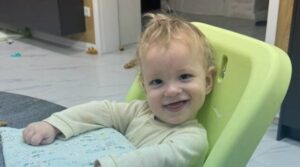
Diagnosis: Cerebral Palsy, Spastic Tetraparesis. Age: 1 Year 5 Months
Results of stem cell and exosome therapy.
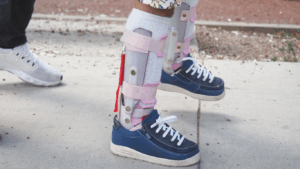
Diagnosis: Cerebral Palsy Sequelae, GMFCS 4, Age 5
Results of stem cell therapy one week after infusion.
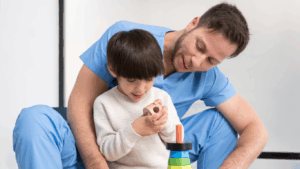
Diagnosis: Cerebral Palsy, Structural Focal Epilepsy, Mixed-Type Encephalopathy, Corpus Callosum Atrophy, Moderate Tetraparesis, Partial Optic Atrophy, Age 4
After the second protocol using donor cells, he grew noticeably stronger. Hand spasticity decreased, his muscles grew stronger, he can now hold and maintain a seated position, and he no longer arches his head back.
Diagnosis: Autism, Age 4
Results of cell biotherapy in our patient diagnosed with Autism Spectrum Disorder
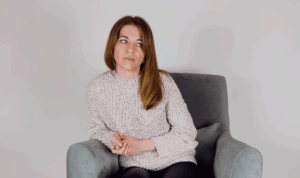
Diagnosis: Autism Spectrum Disorder, Age 6
Video testimonial from Evgenia, mother of our 6-year-old patient with ASD
Evgenia's son completed a comprehensive biotherapy protocol 6 months ago

Diagnosis: Cerebral Palsy, Age 28
Natalya Abramitskaya became an aerial gymnast despite her cerebral palsy diagnosis
Diagnosis: Down Syndrome, Age 2
Before stem cell and exosome therapy: slept poorly, tired quickly, could not walk independently, needed hand support, and had an unsteady gait and balance.
After: became energetic, strong, expressive, and now walks confidently on his own!

Diagnosis: Epilepsy, Age 7
Vasilisa completed a course of cell biotherapy with exosomes in Samara. With her mother's permission, we are sharing Vasilisa's EEG monitoring results before and after the biotherapy course
Diagnosis: Autism Spectrum Disorder, Age 4 Years 7 Months
The mother of little Davidik, who has autism spectrum disorder and is 4 years 7 months old, shared with us the results of the therapy they underwent in March 2024

Diagnosis: Autism Spectrum Disorder, Age 7
Ulyana completed a course of biotherapy in Samara and has now started using exosomes, several months later, due to some mild overexcitation after the main protocol. We waited for her condition to stabilize first, which is very important for a good outcome!